Tips for Healthier Hair
Much of what I’ve learned about hair care, happened All Because of a Hairclip, though some lessons came about through everyday life. The last eight years have taught me much more about hair than I thought possible and I continue to learn new things all the time. For example, I once believed my hair was extremely thick, but now I consider it to be medium thickness. Learning how to care for my hair has been a lifelong process and now I’m teaching those lessons to my daughter (whose hair is thicker and finer than mine!). Here are five lessons I’ve learned and one overall guideline to create healthy hair.
#1. Girl, don’t brush your hair! That is if it is wet or curly. When you do use a brush, also make sure it is the right kind for your hair type. I cannot use one of those round bristle brushes on my hair. It always ends in a tangled disaster. An exception to brushing wet hair is using a brush designed especially for wet hair. I still prefer to wait to brush my hair out, even with this amazing moisture-wicking brush (however, it’s my favorite brush the rest of the time). I do have friends who use this brush to work conditioner through their hair, but that’s likely a whole other topic.
#2. Shampoo is for the SCALP and you likely don’t need as much as you think. The purpose of shampoo is to cleanse the hair of dirt and excess oils. The scalp is the focal point for a cleaner, healthier appearance of the hair. I actually start with a mock wash – I massage my scalp as I do when washing but without shampoo the first time. This loosens the dirt and oil, in addition to feeling nice. (Check out this article for other health benefits of scalp massage). Next, the amount of shampoo you use should be based on the thickness of your hair. My hair is about as thick as the circumference of a quarter, so I use about that same amount of shampoo. Then, instead of directly putting that on my head, I lather it in my hands. Once I have a good lather, I work the shampoo into my scalp, at the base of my neck, in the middle, and continue massaging until my hands are tired. No need to shampoo the ends – what rinses off is enough to take care of that!
#3. Conditioner is for the ends and the amount needed is directly proportional to hair length, thickness, and texture. My hair is just below waist-length with very little texture. Because it is relatively fine, it’s prone to tangle. Even so, I only use about twice as much conditioner as I do shampoo. Just as shampoo is only for the scalp, conditioner is only for the ends. After shampooing, gently wring the excess water out of your hair and apply conditioner from where you would gather a low ponytail all the way to the ends. If your hair is really short but you need help to detangle along the scalp, consider using a detangler (this is my favorite!). I usually let the conditioner sit while I finish the rest of my shower tasks, rinsing at the end.
#4. Consider what you put both ON and IN your body. Getting healthier hair includes not only a good routine but also good products AND good nutrition. Drink plenty of water, eat fruits and vegetables, and take your vitamins. Avoid chemicals as much as possible. Specifically, cut out parabens and sulfates. Do some research to find what will work best for your hair type.
#5. Use heat as little as possible. If you do use heat, consider a thermal protectant. I prefer wrapping my hair to let it dry. Many years ago, I found a hair towel at Bed, Bath, and Beyond. That’s back when I had disposable income and few expenses. I purchased it thinking it would, at the very least, be less bulky than using a full-size towel for my hair. I found several other brands over the years, some working better than others. The best hair towels will have either a bamboo or gauze blend. Both of these absorb excess water without drying out the hair. A GOOD protectant (like the one above) also provides UV protection.
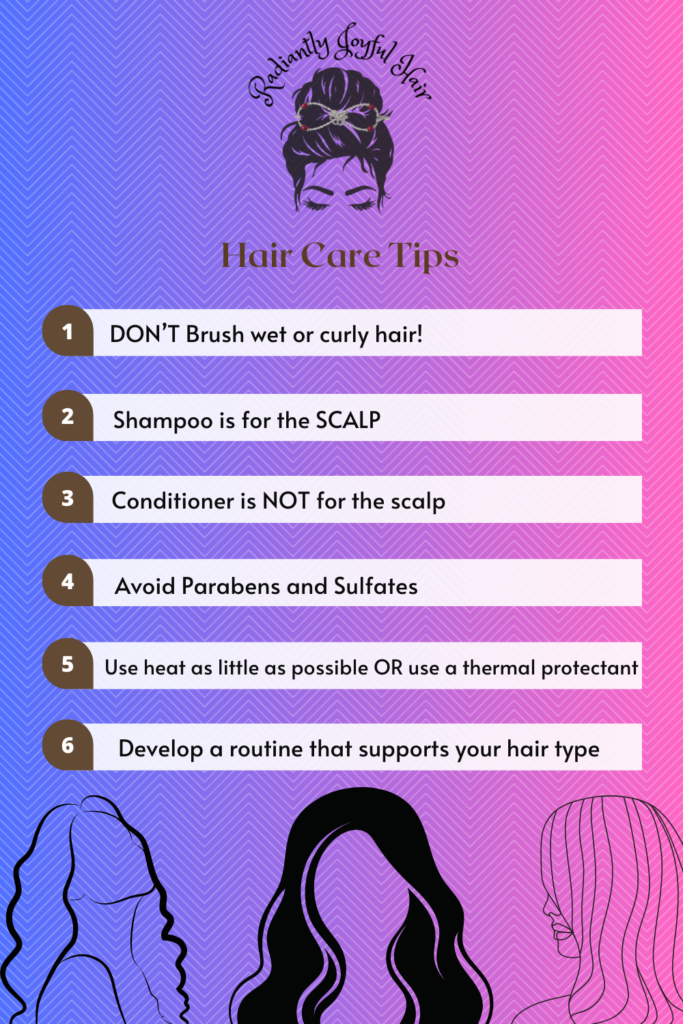
Sometimes we battle the elements, like high wind or a sudden downpour. Our environment impacts our hair health. You may find that your hair care regime changes with the seasons. Even so, your hair care routine should match your hair type and your lifestyle. What works for me may not fit with your daily life. Not every hair type requires daily washing. Some hair types may not need conditioner. A few people do not even need to use shampoo. Become the expert on your hair and your body. If you make any changes to the products you use, wait at least two weeks before deciding it’s not working.
Let me know YOUR favorite tips, tricks, and products OR your results after trying any of these! Wishing you many happy hair days!
I really liked it
Love it, best Hair care tips ever!
I really enjoyed your tips! Avoiding brushing wet or curly hair is such an important practice, and your advice on using the right brush for different hair types is absolutely true. The pre-wash scalp cleansing step was new to me and sounds very effective.
My daughter’s hair isn’t curly, either way, she needs reminding to brush out the tangles.
Wow, great write up, please write more about hair care.
So you’re telling me all this time I’ve been brushing my wet curls and basically committing hair crimes? Curious—does your daughter actually listen to these rules, or does she sneak the brush anyway?
Hair care made simple—love these tips and can’t wait to use them myself.
I was looking for some easy tips for healthy and shiny hair.
I really enjoyed reading your hair caretips! Your advice on not brushing wet or curly hair was a game-changer for me. I also love how you emphasize using the right brush for your hair type—it’s so true that one size doesn’t fit all. Your method of pre-washing the scalp with a mock wash before shampooing is something I’ve never tried but will definitely incorporate. I also appreciate how you’re passing down these lessons to your daughter—it’s so important to share these self-care habits with the next generation. Thanks for sharing your wisdom!
Great tips! I love the focus on scalp care and the reminder to use heat sparingly. I’ll definitely try out some of these suggestions—thanks for sharing!