The Empty Pew
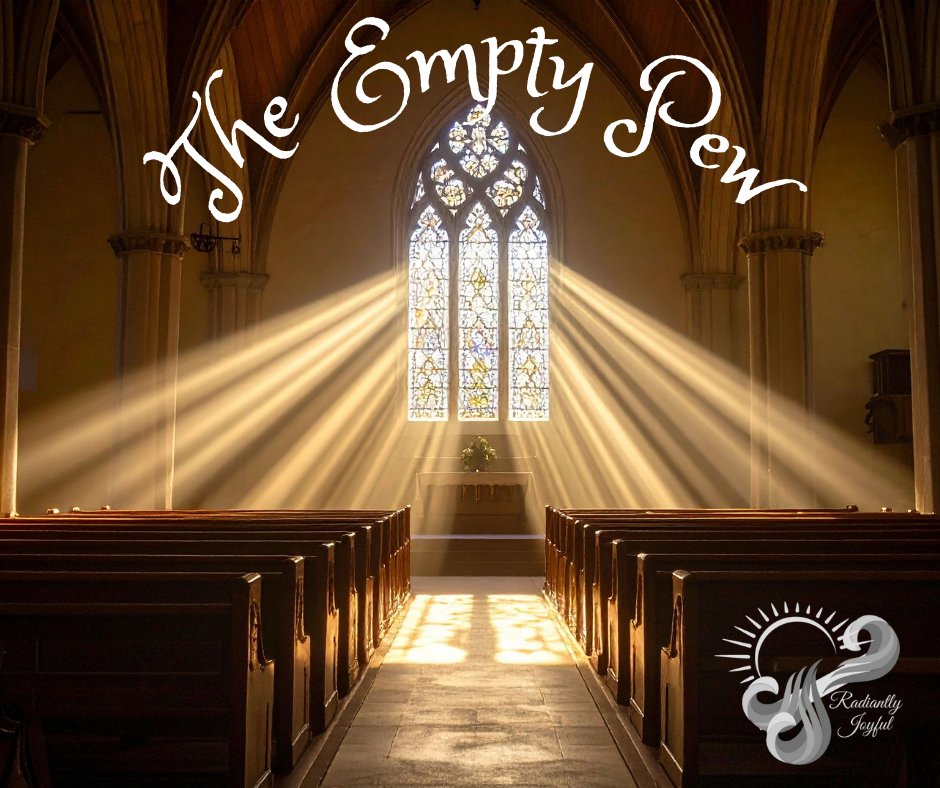
A quiet exodus is happening in our churches, without headlines, slowly and silently. Without warning, a familiar face vanishes, leaving only an empty pew. Throughout my lifetime, the statistics have not changed. Despite the additions of youth ministry, college ministry, and entertaining activities, we are losing approximately two-thirds of our children. Only about a third of that group ever returns.
These are not “unchurched” kids. These are kids who attended Sunday school, learned the songs and memory verses, and were familiar with the classic Bible stories. Many of their weeks were filled with fun, friends, retreats, camps, vacation Bible school, worship nights, or service projects. Yet, they fell away.
Recently, I listened to Letters to the American Church by Eric Metaxas. Many of his challenges pressed deeply on my heart. Some even shouted at me. While the book is not specifically about children or youth ministry, it serves as a warning to the church about living boldly and faithfully in a culture that resists truth. The author’s emphasis on costly faith and the need for conviction stirred questions about how we raise the next generation, how we model belief, and whether we are preparing children to stand firm when faith requires sacrifice.
A Personal Grief
I “grew up in the church,” and while I have struggled at times to find my place, I cannot bear to abandon a faith community. I have worshiped around the world. I have taught Bible classes for nearly twenty years in two countries. I have watched children grow up in the pews, surrounded by Scripture, worship, and endless church events. They knew the right answers. They memorized the verses. They sang “Jesus Loves Me” with confidence and joy. Yet, some of those same children became adults who no longer follow Christ.
Some chose lifestyles opposed to Scripture.
Some walked away after being hurt or disillusioned. Some may still have faith, but they never enter the building again.
Some drifted, never developing a faith of their own outside of the church building.
Some still attend occasionally, but their hearts are far from God.
Every Sunday, I look around the assembly and pray for every child, wondering what their story will be. This is not from a place of judgment. I am finally compiling these thoughts from a place of deep grief.
We can no longer assume that growing up around the church produces disciples. We cannot believe that exposure to biblical stories creates conviction. We cannot rely on programs, excitement, or activities to anchor souls when trials come.
Faith must be formed, not inherited; rooted, not superficial; lived, not attended.
A Hard Truth: Programs are NOT Enough
Programs, classes, and structured ministries can support spiritual growth, but they are not the determining factor in church retention. The early church did not rely on age-divided ministries or entertainment to form faith. Faith was handed down through family devotion, reading Scripture together, worship within the home and congregation, mentoring, and shared daily life across generations.
Research shows that lasting faith grows in relationships and environments that continue beyond scheduled activities. This includes faith being modeled in the home, intergenerational relationships with members of the church, personal Bible study, mentorship, and accountability outside of the church building, and intentional personal spiritual discipline.
Studies consistently show that family religious practice strongly correlates with children continuing those practices into adulthood. This reflects the idea that the family is the church in miniature. In homes where Jesus is spoken of regularly, Scripture is read together, and faith is lived in practice, children learn the importance of spiritual habits, just as they learn physical ones like brushing their teeth.
When young people form meaningful relationships with mentoring adults in the congregation, they are twice as likely to stay involved, to read Scripture, and to value the church as part of their adult life. My son’s best friend at our congregation is an 87-year-old man.
These intergenerational relationships are among the strongest predictors of continued faith. When faith is woven into relationships and practiced across age groups, it is more likely to endure.
A full calendar of activities does not create lasting faith. Programs may support, but they do not sustain, mature, or allow faith to become central in a person’s life, regardless of age.
True discipleship is life shared in Christ. It forms around tables, in worship, in service, in Scripture, and in relationships that follow Jesus throughout the week, not only in a classroom on Sunday morning.
Classroom instruction cannot replace what is lived and practiced in homes. Children who hear about Jesus once or twice a week may learn stories. Children who see Jesus in daily life learn discipleship. Faith is formed when Scripture becomes part of conversations, decisions, habits, and relationships long before and long after the closing prayer on Sunday morning.
I say all this even though I teach Bible classes, write curriculum, and pour into children every week. The Word of God is worth teaching, but if faith only happens in the classroom, it will not last.
Real discipleship begins where children eat, sleep, learn, and grow. It begins in conversations at dinner tables, prayers whispered before bed, and Scripture opened throughout the week, not only on Sunday mornings. The home is where faith takes root. The church walks alongside. When families live out their faith daily and the church reinforces that foundation, children are not only taught the Bible, they learn to follow Jesus with their whole lives.
The Harder Truth: The World is Teaching Too
“Turning the other cheek does not mean standing by while the enemies of God dismantle Christian civilization and brainwash our children.”
Eric Metaxas, Letters to the American Church
Children are always being discipled. They have immediate access to infinite information in the palm of their hands. Which voices will they choose to follow? Schools, entertainment, peers, music, online platforms, and cultural narratives shape identity, values, truth, and morality. Each vies for influence so their agenda continues. The world is not passive. The church must be just as intentional and relentless. When the world persuades with shiny alternatives to truth, the church must speak.
Silence is not meekness. It is surrender.
It has been said that the church is always one generation away from apostasy. I first heard this quote as a teenager myself. The saying endures because it reflects truth: if one generation fails to pass on faith through obedient living and teaching, the next generation inherits confusion rather than conviction. We see this throughout the Old Testament, from the “race that didn’t know Joseph,” to the time of Judges, when “everyone did what was right in his own eyes,” to the divided kingdom, captivity, and return from exile.
A few hours in a church building will never outweigh hundreds of hours of cultural formation. If children receive more instruction from screens, classrooms, and social circles than from Scripture and godly relationships, their worldview will reflect those sources.
Do We Really Believe What We Say We Believe?
“Does how I live show God that I actually believe what I claim to believe?”
Eric Metaxas
Children learn by watching. When it comes to developing their own faith, this means watching how their parents live. Scripture commands parents to teach the Word diligently: when sitting, walking, waking, and lying down (Deuteronomy 6:6–7). Parents are instructed to raise their children in the discipline and instruction of the Lord, not leave that responsibility to others (Ephesians 6:4).
If children see worship, prayer, repentance, service, obedience, and Scripture woven into daily activity, they learn that following Jesus is a way of life. If they see worship sidelined, church attendance treated as optional, Scripture ignored, or commitment to God replaced with convenience, they learn that faith is an accessory.
Paul urged believers to imitate his example as he imitated Christ, teaching not only through words but through what others “learned and received and heard and seen” (Philippians 4:9). James warned that hearing the Word without doing it leaves faith hollow and ineffective (James 1:22).
Children are not only listening to what we teach; they are watching how we live. They learn what truly matters by watching how the adults of faith around them live, and their understanding of God, truth, and discipleship is shaped by what they see.
When Bible Class is the Only Bible
Even the best of parents can fall into the trap of busyness and let spiritual disciplines slide. Some children only hear the Word of God inside a church building. Bible classes can be a chaotic place to learn when no foundation exists. In some places, such disruptive behavior is tolerated and reverence is optional, to “give parents a break.”
If Bible class is the only source of teaching, those classes must be spiritually serious, Scripture-rich, and anchored in discipleship, not entertainment. Basics, such as how to open a Bible, pray, and even simple obedience, create the foundation for teaching worship, repentance, and endurance. However, attendance alone is not transformation.
Discipleship is Lifelong
Some people come to Christ later in life. Some return after years away. Some grow slowly and quietly for decades before their faith deepens. Not every believer begins with a childhood foundation of Scripture. Yet every believer needs this foundation as they mature.
Emotion and entertainment will not sustain them. Programs will fail them when trials come. Long-term faith is held up by Scripture, relationship, obedience, and accountability.
Mentorship is not optional. It is how faith is passed from generation to generation. It must happen beyond the walls of the building, in homes, at tables, through shared suffering, prayer, study, and service.
Even faithful members who have been in the church for decades need continued mentoring. We never graduate from discipleship. The Christian life does not have a retirement plan. We never outgrow the need to learn from those stronger or farther along. If the early church devoted themselves to teaching, fellowship, and prayer as daily life, then we cannot reduce spiritual growth to a schedule of events.
Faith that lasts is formed in community, rooted in Scripture, and nurtured through mentorship. Attendance alone never created a disciple at any age.
A Call to Parents
This is not a call to perfection. It is a call to faithfulness. Read the Bible with your children, pray out loud as a family, and talk about God every day. Teach the importance of obedience and respect. Set expectations and model the behavior and lifestyle you want for your children. To grow faithful adults, we must be faithful adults.
A Call to the Church
“Whenever a church is subservient to the state or to the reigning worldly culture, it is no longer the Church of Jesus Christ. It is a counterfeit church.”
Eric Metaxas
The culture of busyness, apathy, and entertainment creates chaos. Following the culture produces distracted children, not disciples. The church’s role mirrors and reinforces that of the parents. To build faithful disciples, we must teach Scripture deeply, not only through reading or memorization. We must have expectations for reverent behavior and show respect for every member of the body. We must provide and encourage intergenerational relationships and mentoring. We must equip members in their current stage of life: parents, singles, new converts, retirees, widows, and widowers.
Let’s stop confusing noise and activity with growth. We are not raising attendees. We are raising disciples.
A Final Plea
The quiet exodus will not be reversed by better branding or louder calendars. It will be reversed when faith takes root in the places where children grow: homes, hearts, relationships, and daily obedience. Churches can nurture and equip, but parents and mentors must disciple.
Faith that endures is formed in ordinary moments. It grows in conversations around dinner tables, prayers whispered in bedrooms, open Bibles on kitchen counters, forgiveness practiced in conflict, and obedience lived when no one is watching. These moments shape identity more deeply than any event or program ever could.
We must teach truth with clarity.
We must live it with consistency.
We must give children Jesus, not substitutes.
If we do not, the world will fill the gap.