Surrendering to the Great Physician
I do not pretend to understand God. In a season of healing and uncertainty, I often feel incomplete while waiting on God’s timing. Even so, I am seeing glimpses of God’s character more clearly.
This year, I’ve had more medical appointments, tests, and treatments than possibly any other year of my life. God’s sovereignty does not shrink in the presence of symptoms. His rule does not weaken when diagnoses multiply. His authority does not fluctuate with lab results. Through it all, He is the Great Physician, Rapha, my Healer. I’ve held on to this name tightly over the last several weeks.
We first see the name Rapha in Exodus. Israel crosses the Red Sea and enters the wilderness. They encounter bitter water at Marah. In that moment, God revealed something about Himself: “I am the Lord who heals you” (Exodus 15:26).
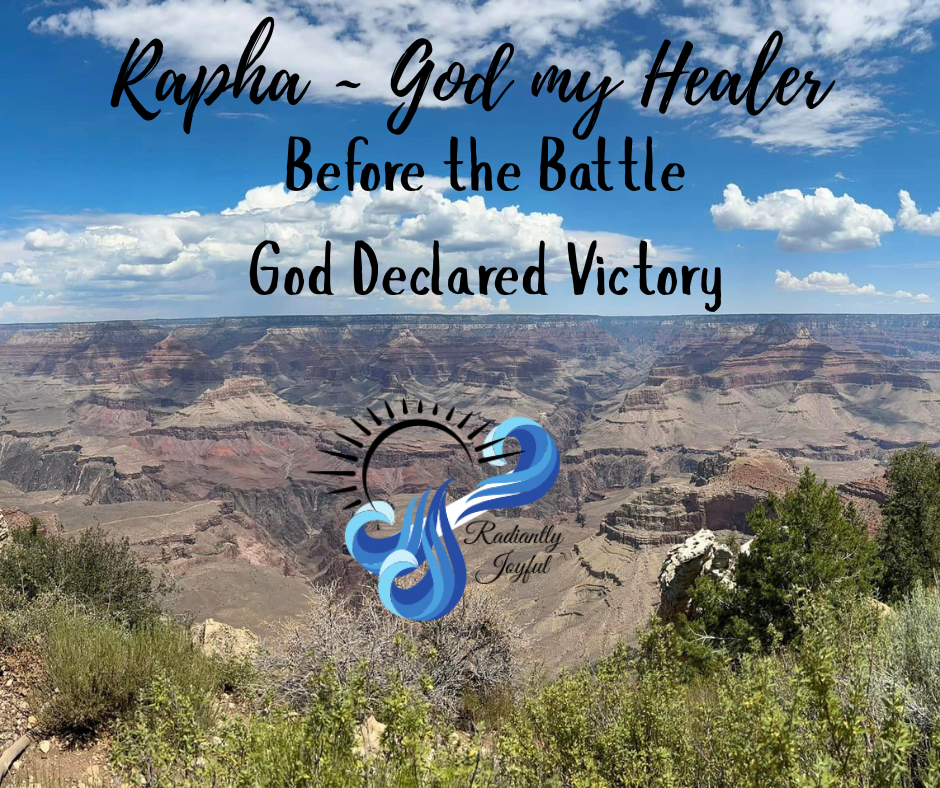
The Hebrew word behind that promise is rapha, which means to restore, mend, or make whole. God reveals His name not at the end of the trials of the wilderness, but at the beginning of the journey. Hunger, conflict, and long seasons of wandering still waited ahead. Before the battles ever started, God declared victory.
This name gave the people a way to understand the road ahead. When hardship appeared, they could remember what God had already revealed about Himself. Rapha reminded them that restoration was part of His nature, even when circumstances seemed uncertain.
God’s deliverance did not remove the wilderness. Israel still walked through the desert, experiencing the weight of hunger and uncertainty. The declaration of “Healer” did not eliminate struggles, but served as an Anchor to the One who rules over all things.
Jesus reveals this reality when He says, “Before Abraham was born, I am” (John 8:58). His words echo the name God revealed to Moses at the burning bush: “I AM WHO I AM” (Exodus 3:14). The name reflects God’s eternal nature. Past, present, and future remain fully known to Him.
David writes that God formed him in his inmost being and saw his days before any of them began (Psalm 139:13–16). While we experience life one moment at a time, God sees the entire story at once. His declarations reveal certainty where people often see uncertainty.
Healing, by human definition, often means the removal of symptoms. Healing in Scripture stretches further. In Isaiah 53:5, healing comes through suffering. In Revelation 21, complete healing appears when death, mourning, crying, and pain are no more.
Perfect healing belongs to God’s definition, not ours. The New Testament often uses the Greek word therapeuō, meaning to serve, to attend, or to provide care. The Healer is present before, during, through, and after our pain. Nothing in my life escapes His final restoration. Understanding this does not eliminate discomfort. It powerfully reframes it.
David wrote in Psalm 34, “I sought the Lord, and He answered me.” He wrote those words while fleeing for his life, not when he reached safety. The pursuit of God preceded comfort and relief.
Wilderness moments often reveal the condition of the heart. A hardened heart resists what God reveals, while a seeking heart recognizes His character even when the road remains uncertain. We see God’s faithfulness as we endure the wilderness.
Healing may not look or feel like we expect. The wilderness may last longer than we planned. When the Healer is doing the work, even in ways we do not fully understand, we can trust His timing.
Surrender means releasing not only our expectations, but also the expectations others place on us. Surrender allows God to define what progress looks like. Surrender refuses to measure His faithfulness by speed.
“I sought the Lord” remains the right response.
I do not understand all of it, but I see enough to trust that His definition of complete healing surpasses mine.
That is confident surrender.