

Two years ago, I took on the task of revamping the curriculum for the 3–4-year-old class at our congregation.
Teaching children is about much more than having the right lesson prepared. To teach them well, we have to pay attention to the child in front of us.
Our congregation is small. Most of the time, I have one student. A class with one student is still a class worth teaching. In fact, one-on-one teaching provides opportunities that are much harder to find in a larger group. I can listen to every question, follow his interests, recognize when something isn’t connecting, and adjust the lesson to what he needs that day. The goal isn’t to get through the material. The goal is to teach the child in front of me.
The first and most important “rule” in teaching, no matter the age or size of your audience, is your willingness to listen. The second is cultivating critical thinking and teaching how to find Biblical answers to any question.
At least five times during the class, a child will ask, “Can I tell you something?” I always stop, make eye contact, and say, “Yes.” While he tells me whatever is on his mind, I listen and respond. Because he is typically the only student in the class, there have been times when the lesson is disregarded because what he needs is to cry and be held. There have been days when the lesson is shorter, and he shows me how fast he can run around the table. When we teach children, we must be in tune with their needs. I still talk to him or sing as he snuggles or runs around the room. He knows he is safe and loved when he is with me, even when I set boundaries. Listening does not mean abandoning the lesson. Listening helps us know how to connect what we are teaching to the child in front of us.
No matter what age I teach, I often feel like I gain more than the students. I learn more as I study and adapt to the ages and stages of the children. When I teach, I also learn from them. The observations children make reflect their understanding and experience. Their questions provide opportunities, even for the teacher, to learn and grow.
Teaching children to love Jesus and follow God’s Will is about much more than the rules or a collection of stories and memory verses. Share what the love of Jesus means to you. Share how following God has challenged you and helped you in your life—yes, even with 3–4-year-olds! Help them write God’s Word on their hearts so that as they grow, they understand and apply the rules and stories in their own lives.
Children need more than opportunities to hear us talk about following Jesus. They need to see us follow Him, and they need opportunities to follow Him beside us.
When it comes to serving, I do not tell children they are too young or too little. In my family, my children are included in everything I do. I grew up with this example, so it was natural for me. I enjoy making meals for new moms, someone who’s recently had surgery, or those who’ve lost loved ones. My kids work alongside me, and we often make the deliveries together.
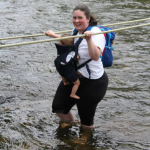
In the Old Testament, we are instructed to teach our children “as we go.” Hundreds of years later, Jesus tells us to “go” and share the Gospel. Go does not always mean leaving one place to do something in another. Go often means taking action right where you are.
My job as a mom is to prepare my children to go into the world. When they are little, you teach them to look (“Watch where you are going!”) and listen (“Follow directions!”). These same lessons hold great value as we grow up and go about in the world. Look for ways to serve, listen to the needs of others, and take action.
Teach them about Jesus as you go. Better yet, take them with you.







1 comment
growin49_wp
Prayer is an ongoing conversation with God, not only a set aside time of doing nothing else. I pray while I do everything. We listen to scripture together and talk about spiritual matters.